
Buying a Home in Charleston or Benton, Tennessee: A Practical Guide for Buyers Who Want Space, Quiet, and Outdoor Access


A Quiet Side of Southeast Tennessee Worth Considering
On a family rafting trip down the Ocoee, it does not take long before everyone finds their role: one person becomes the unofficial photographer, one kid becomes convinced they are the assistant guide, and someone always spends half the trip laughing after getting splashed with cool river water. Between the mountain views, the splashing, and the steady reminders to “paddle, paddle, paddle,” the river has a way of turning a regular weekend into a story everyone keeps retelling. Life here can feel calm and manageable during the week; while still keeping families close to the kind of outdoor memories they will talk about for years.
Charleston and Benton, Tennessee appeal to buyers who want more space, a slower pace, and a stronger connection to the outdoors without feeling cut off from daily necessities. Charleston sits in northern Bradley County along the Hiwassee River, with access to Cleveland, Calhoun, Athens, and I-75. Benton sits further east in Polk County, where daily life feels more rural and outdoor-oriented, shaped by Highway 411, Highway 64, the Ocoee River, the Hiwassee River, and Cherokee National Forest. Polk County identifies Benton as the county seat, while Charleston’s local identity is closely tied to the area’s heritage sites.
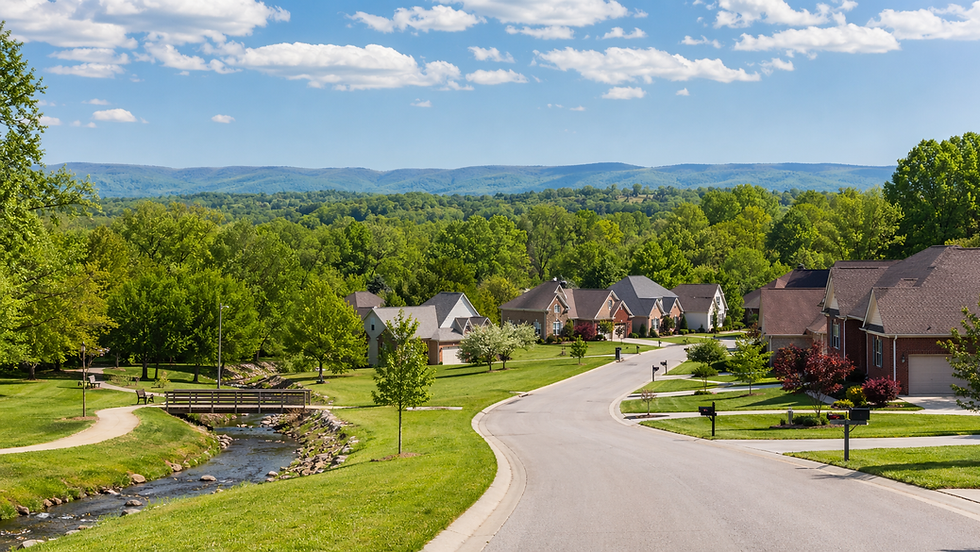
For buyers, the appeal is not endless shopping, dense subdivision growth, or a short drive to every major employer in the region. The appeal is quieter roads, larger lots, river access, outdoor recreation, local history, and the chance to find a home with land, privacy, or more of a small-town setting.
Some buyers will love the slower rhythm and rural feel. Others may decide they want shorter drives, more restaurants, newer neighborhoods, or more suburban convenience. This guide will help you understand how Charleston and Benton differ, what daily life looks like, what kinds of homes you may find, and what to watch closely before buying.
Where Charleston and Benton Sit
Charleston and Benton belong to the same general corner of Southeast Tennessee, but a buyer would experience them differently once they start comparing properties. Charleston points more naturally toward the Cleveland side of the map, where many residents handle shopping, appointments, work, and everyday needs, while still enjoying a smaller community setting along the river. Benton has a different pull. It acts as a center point for Polk County life, with courthouse activity, schools, local services, rural roads, and recreation routes all feeding into the way the town functions. Around Benton, the landscape starts to feel more like the gateway to river country and the Cherokee National Forest, while Charleston feels more connected to Bradley County routines and the Hiwassee Valley.
Before choosing between the two, buyers should test the weekly routine. A home may look close on a map, but school drop-off, grocery runs, church, sports, medical appointments, and the roads you would actually drive every day can change how convenient or rural the property feels.
The choice between the two towns usually comes down to how much convenience, quiet, and rural character you want in your everyday life. Charleston may feel easier for buyers who want a peaceful home setting but still expect regular trips into Cleveland for work, errands, dining, or appointments. Benton may feel better for buyers who are willing to trade some convenience for more country roads, privacy, scenery, and quicker access to the outdoor side of Polk County. Neither option should be judged by town name alone. A home five minutes from your main route may feel completely different from one tucked farther down a back road, and that difference can affect everything from school mornings to grocery runs to resale appeal.
How History Still Shapes These Towns
Charleston and Benton were not built first around modern subdivision growth. They developed around older patterns: rivers, county government, farming communities, Cherokee history, and the needs of people living in rural Southeast Tennessee.
Charleston’s history is closely tied to the Hiwassee River and to one of the most serious chapters in the region’s past. The National Park Service identifies the Hiwassee River Heritage Center in Charleston as a certified site on the Trail of Tears National Historic Trail. The site includes interpretive panels about Charleston’s role as a key Cherokee removal site in eastern Tennessee.
For buyers, this matters because Charleston does not feel like a place created yesterday. The river and the local heritage of historic sites give the town a deeper identity than its size might suggest. You can see that in the Hiwassee River Heritage Center, local preservation efforts, community events, and the way the town’s story remains connected to the land around it.
Benton’s history shaped it differently. Polk County was established in 1839, and Benton became the county seat. The county’s history includes copper mining near Ducktown and the Ocoee and Hiwassee River corridors. Benton's history helps explain why the area feels tied to land, work, and outdoor recreation instead of newer suburban growth.
Small town history shows up in the housing and land patterns. Buyers may see older homes, long-held family land, small civic centers and established churches that grew gradually instead of as part of one planned development. That can add character, but it also calls for careful due diligence. Older areas may have septic systems, wells, irregular lot lines, easements, or homes with aging systems. Those are not reasons to avoid the area. They are reasons to slow down, ask good questions, and understand the property beyond the outer character.
Daily Life and Community Feel
Daily life in Charleston and Benton tends to be quieter and more connected to the surrounding land than what buyers may find in densely populated areas. These are not places where every errand, restaurant or activity sits five minutes away from home. Much of life is built around routine routes: school, church activities, local parks, youth sports, work in Cleveland or nearby towns, and weekends spent near the river, or out in the mountains.
But, Charleston does often appeal to buyers who want a small-town feel without really being too far from Cleveland’s larger set of services. It can be a good fit for families who like a quieter setting, retirees who want a slower pace, first-time buyers looking beyond busy markets, or anyone who wants a home base near the Hiwassee River. The community feels tied to everyday connections people build through the location.
Benton has a more rural and outdoor-oriented feel. It often appeals to buyers who want privacy, acreage, room for a workshop or garden, access to the Ocoee and Hiwassee region, or a setting away from dense development. Benton’s county-seat role gives it a practical center of gravity, but the surrounding landscape gives it a stronger country identity.
For buyers moving from a larger city or fast-growing suburb, the pace may take some adjustment. There may be fewer restaurants, fewer stores, and less immediate convenience. For buyers who want space, quiet, outdoor access, and a more grounded community feel, that slower pace is often the point.
Outdoor Recreation and Things To Do
Outdoor recreation is one of the strongest lifestyle reasons buyers consider Charleston or Benton, but it looks different depending on which area fits you best.
In Charleston, outdoor life is connected with local recreation spaces. Hoyt Berry Municipal Park includes playgrounds, picnic areas, walking trails, sports fields, a gazebo, and an outdoor stage. The city also identifies public boat access on the Hiwassee River with parking, picnic tables, and a floating pier.
Benton’s outdoor appeal is more regional. Polk County’s Ocoee Country materials highlight the Ocoee and Hiwassee rivers, Parksville Lake, waterfalls, and forest recreation. The Ocoee is known for whitewater recreation, while the Hiwassee offers a more relaxed river setting for floating, paddling, and fishing.
The real value is not just in the bigger weekend destinations. It is in the way outdoor life can become part of normal routines and simply living in a place where the river is part of the local landscape instead of on a special trip. Families may appreciate the built-in memory-making, retirees and remote workers may enjoy the scenery and slower rhythm, and first-time or move-up buyers may like the chance to find more space while still staying close to meaningful access.
Buyers simply need to match the setting with their daily needs. A river-area home may call for a closer look at floodplain details, while a private hillside property may be worth checking for driveway grade, cell service, and the drive to groceries or schools. With a little extra attention up front, buyers can choose a home that gives them the scenery, space, and outdoor lifestyle they want without overlooking anything that affects daily life.
Housing Market and Buyer Considerations
Buying in Charleston or Benton is less about comparing houses by bedroom count alone and more about understanding the full property. The home matters, but so do the land, utilities, road access, internet, school zoning, flood risk, and long-term upkeep.
Charleston buyers may find older homes, modest single-family houses, larger lots, and properties with a river or countryside feel. Benton usually offers an even wider mix, including in-town homes, farmhouses, manufactured homes, cabins, newer builds, acreage, river-access properties, and higher-priced rural homes. Because both markets are smaller and more varied, online price averages can shift quickly depending on which homes are for sale. Recent Realtor.com data showed Benton with a median listing price in the high-$200,000s, but buyers should treat that as a general snapshot, not a rule.
That variety can create opportunity. Buyers who are open to a quieter setting, older home, or more land may find options here that feel harder to find in busier areas like Cleveland, Ooltewah, East Brainerd, or Chattanooga. The key is knowing what is behind the price. A home with a solid roof, updated heating and air, good drainage, reliable internet, usable land, and easy access may be worth paying more for. A lower-priced home may not be a bargain if it needs major repairs, has poor drainage, limited internet, a difficult driveway, or septic issues.
Before buying, look closely at the roof, heating and air, foundation, plumbing, electrical, septic or sewer, public water or well, internet service, floodplain details, driveway access, and how usable the land really is. Five acres may sound ideal, but if most of it is steep, wet, wooded, restricted, or hard to reach, it may not live the way a buyer expects.
The best purchase in Charleston or Benton is one where the house, land, commute, schools, utilities, and maintenance all work together. For buyers who want more space and a quieter setting, these areas can offer real value, but the smartest decisions come from looking beyond the listing photos and understanding how the property will work in everyday life.
Schools, Commutes, and Daily Convenience
School research matters in both areas because small-town addresses can create confusion. Charleston Elementary is part of Bradley County Schools, and Walker Valley High School serves the broader northern Bradley County area. Walker Valley’s official site highlights fine arts, athletics, and student programs, while Bradley County Schools lists Charleston Elementary and Walker Valley among its schools.
Benton-area buyers will generally look to Polk County Schools. The district lists Benton Elementary School, Chilhowee Middle School, Polk County High School, and Polk Innovative Learning Academy with Benton addresses, along with other schools serving the wider county. Buyers should verify zoning directly with the district before making an offer, because listing sites and third-party maps may not tell the full story.
Commuting also deserves a practical look. Cleveland and Bradley County provide a larger employment base nearby, with major employers listed by Cleveland/Bradley Economic Development including Whirlpool, Bradley County Schools, Peyton’s Southeastern, Tennova, Jackson Furniture, Amazon, WACKER Polysilicon, Cleveland City Schools, Walmart, Bradley County Government, Mars, and Lee University.
That regional job base helps explain why Charleston and Benton can work for buyers who want a quieter home setting while staying connected to larger employment and service centers. Still, the actual route matters more than the mileage. School traffic, rural roads, river traffic during recreation season, weather, and the home’s location in relation to major roads can all affect daily life.
Events, Traditions, and Local Identity
Community life in Charleston and Benton is not built around a large downtown entertainment district or a packed calendar of big-city events. It is more local than that. The rhythm comes from school activities, churches, parks, fairs, seasonal gatherings, outdoor recreation, and events that reflect the area’s history and rural identity.
In Charleston, the International Cowpea Festival and Cook-Off is one of the clearest examples of local identity. The festival includes music, crafts, food, a marketplace, children’s activities, a photo contest, and a heritage area sharing parts of Charleston’s story, including Cherokee, Civil War, and river history. Proceeds support the Hiwassee River Heritage Center, which reinforces the connection between the event and the town’s heritage work.
That matters for buyers because it shows Charleston is not simply a quiet place near Cleveland. It has its own identity. The same community that gathers around local traditions is also tied to the Hiwassee River, the Hiwassee River Heritage Center, and the area’s deeper history. For a new resident, that can help the town feel more rooted and less like just another rural address.
Benton and Polk County have a different rhythm. Polk County’s identity is tied to rural life, local families, schools, county government, outdoor recreation, and the mountain-and-river landscape. The county’s own materials describe Polk County as “Where the Mountains Meet the River,” which fits the way many buyers experience Benton: practical enough to function as a county seat, but close enough to the outdoors for recreation to shape local life.
For homebuyers, the takeaway is simple. Charleston feels more heritage-and-river centered. Benton feels more county-seat, school, fairground, and outdoor-recreation centered. Neither place is trying to be a major entertainment hub. Their identity is quieter, more local, and more tradition based.
Buyers who enjoy school events, church activities, local fairs, river days, youth sports, and familiar community routines may find that appealing. Buyers who want constant nightlife, large event venues, or a more urban social scene may feel limited. That honesty matters because choosing the right town is not just about finding a house. It is about choosing a rhythm of life.
Who Charleston and Benton May Be a Good Fit For
Charleston and Benton can be a strong fit for buyers who want more breathing room than they may find in busier parts of Cleveland, Ooltewah, East Brainerd, or Chattanooga. These communities are especially appealing to people who like the idea of a quieter home setting, larger lots, rural surroundings, river access, and a slower pace without being completely removed from schools, shopping, work routes, and daily services.
Charleston may be a good fit for buyers who want a small-town Bradley County location with practical access back toward Cleveland and I-75. It can appeal to families who want school and recreation routines without a busier suburban feel, retirees who want quiet but still need access to Cleveland-area services, and buyers who like historic character, river-town identity, and an established local community. It may also work well for commuters who want a quieter home base while staying connected to Cleveland, Calhoun, Athens, or the larger I-75 corridor.
Benton may be a good fit for buyers who want a more rural setting, more land, outdoor recreation, and access to the Ocoee, Hiwassee, and Cherokee National Forest region. It can appeal to buyers looking for acreage, privacy, workshops, gardens, storage, or a home that feels connected to the outdoors. Retirees, remote workers, outdoor-focused families, and buyers seeking a lower price point than some nearby suburban markets may find Benton worth a close look, especially if they are comfortable with rural property details.
Both areas can also make sense for first-time buyers or move-up buyers who are willing to look beyond the most obvious suburban neighborhoods. A buyer who values land, setting, storage, or a quieter road may find appealing options here. In some cases, the value is not just the house itself, but the space around it and the lifestyle that comes with it.
At the same time, Charleston and Benton are not the perfect match for everyone. Buyers who want a dense downtown lifestyle, walkability to restaurants, sidewalks throughout the neighborhood, short drives to every major job center, or a large number of newer subdivisions may need to compare these towns carefully with Cleveland, Chattanooga, Ooltewah, Collegedale, or other nearby alternatives.
The best way to think about Charleston and Benton is not simply, “Are they good places to live?” A better question is, “Do they fit the way I want to live?”
Final Thoughts: Why Charleston and Benton Are Worth Considering
Charleston and Benton are not right for every buyer, which is exactly why they are worth understanding before you start comparing homes. These communities work best for people who want a quieter pace, more breathing room, outdoor access, and a home setting that feels connected to the land around it.
Charleston may appeal to buyers who want a historic river-town feel with practical access back toward Cleveland. Benton may appeal to buyers who want a more rural setting near the Ocoee, Hiwassee, and Cherokee National Forest. Both can offer a strong quality of life, but the right choice depends on the property, the commute, the schools, the utilities, and how the area fits your everyday routine.
This Lilly Garrett, and I’m so glad you took the time to read this guide. At Mighty Oaks Realty, we help buyers look past the listing photos and think through the full picture: location, commute, schools, property condition, acreage, resale appeal, and day-to-day fit. If you are considering Charleston, Benton, Cleveland, Polk County, or nearby Southeast Tennessee communities, we would be happy to assist you in comparing your options and find a home that truly fits. Check out our buyer's page and download the relocation guide so we can help you find a place that feels right for their next season of life.
Sources and References
City of Charleston, Tennessee — local parks, boat access, recreation, and town information.
National Park Service / Hiwassee River Heritage Center — Charleston’s Trail of Tears history and heritage context.
Polk County Government — Benton as county seat, Polk County location, county history, and regional identity.
Ocoee Country / Polk County Chamber — Ocoee and Hiwassee River recreation context.
Cherokee National Forest / U.S. Forest Service — regional public land and outdoor recreation context.
Bradley County Schools / Charleston Elementary — school context for Charleston-area buyers.
Polk County Schools — Benton-area school locations and district context.
Cleveland/Bradley Economic Development — regional employer context.
International Cowpea Festival — Charleston community tradition and local identity.
Realtor.com — Charleston / 37310 Housing Market — public housing market indicators for Charleston and the 37310 area.
Realtor.com — Benton Housing Market — public housing market indicators for Benton.


Comments