
Living in St. Elmo and Chattanooga’s Historic Southside: A Practical Guide for Serious Buyers


Two Chattanooga Neighborhoods with Different Personalities
The first time I really understood this part of Chattanooga, I felt like I had changed neighborhoods in the time it takes to finish a cup of coffee — and around here, maybe before the coffee even cooled down. One minute I was in St. Elmo watching the Incline crawl up Lookout Mountain while people walked dogs past old porches and shady sidewalks, looking like they had life figured out better than the rest of us. A few minutes later, I was in Southside, where Main Street had restaurants opening, people meeting for dinner, and enough going on to make my “quiet evening” start negotiating with me. That is what makes buying here so interesting. St. Elmo and Southside are close enough to share daily life, but they give you two very different versions of Chattanooga.
St. Elmo rests at the foot of Lookout Mountain, where older homes, sidewalks, trail access, the Incline Railway, and historic zoning shape daily life. It feels residential, established, and closely connected to the mountain. Southside sits closer to downtown and has a more urban rhythm, with restaurants, event spaces, apartments, townhomes, schools, and stadium activity woven into the area.
At Mighty Oaks Realty, we help buyers slow down and look past the listing photos. In this part of Chattanooga, the right home depends on more than the neighborhood name. The house, the block, the parking, the inspection, and the daily routine all matter.
Who This Area Fits Best
This guide is for buyers considering St. Elmo, Southside, or the older neighborhoods south of downtown Chattanooga. It is also helpful for people comparing this part of town with North Chattanooga, Highland Park, Lookout Valley, Red Bank, Signal Mountain, downtown Chattanooga, East Ridge, or nearby communities across the Georgia line.
These areas tend to fit buyers who enjoy older streets, local businesses, historic buildings, outdoor access, city convenience, and homes with personality. They are especially worth considering for buyers who want a close-in Chattanooga location while still caring about the feel of the street, the age of the home, and the way the neighborhood works day to day.
Where St. Elmo and Southside Sit
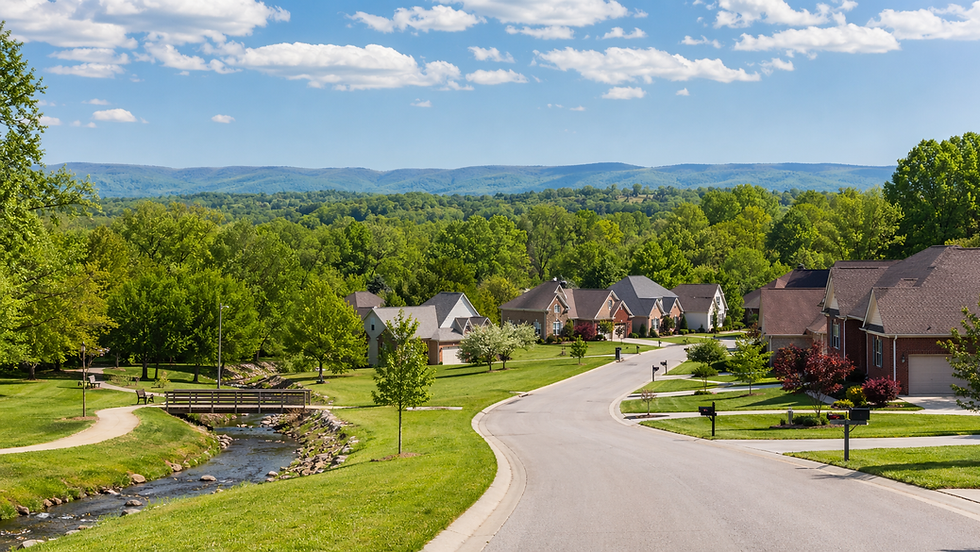
St. Elmo sits below Lookout Mountain near the Incline Railway. Broad Street, St. Elmo Avenue, Tennessee Avenue, and Ochs Highway shape how residents move toward downtown, Southside, Lookout Valley, and the mountain. Buyers usually notice the older residential streets first: porches, mature trees, mountain views, and houses that feel tied to the neighborhood’s age.
Southside works differently. It sits closer to downtown and mixes housing, restaurants, schools, offices, event venues, and entertainment. Main Street, Market Street, Station Street, Warehouse Row, the Chattanooga Choo Choo, Finley Stadium, First Horizon Pavilion, apartments, condos, townhomes, and smaller residential pockets all shape the district.
Most buyers experience this part of Chattanooga through daily routines more than strict boundary lines. A single household may use St. Elmo, Southside, Lookout Mountain, downtown Chattanooga, Lookout Valley, and North Georgia in the same week. The exact address matters because it affects commute routes, school plans, grocery stops, trail access, and weekend habits.
Chattanooga’s growth helps explain why neighborhoods like these continue to draw buyer attention. The city had an estimated population of 191,496 in 2024, up from 181,099 in the 2020 Census. The citywide mean commute time was 18.5 minutes from 2020 to 2024, which helps explain the appeal of neighborhoods that keep downtown within practical reach.
How the Past Still Shapes the Streets
St. Elmo developed below Lookout Mountain as Chattanooga grew after the Civil War. In 1885, Col. Abraham Malone Johnson divided part of his farm into residential and commercial lots and named the community St. Elmo after the popular novel by Augusta J. Evans Wilson.
The Incline Railway shaped the neighborhood early. The first incline opened in 1887, followed by the second in 1895. That connection to Lookout Mountain gave St. Elmo a distinct role from Chattanooga’s flatter downtown and industrial areas.
St. Elmo also had its own civic life before becoming part of Chattanooga. It incorporated as a town in 1905, built a school in 1906, and was annexed by Chattanooga in 1929. That history still shows up in the neighborhood’s older homes, small commercial corners, historic district, and design review process.
Southside followed a different path. It grew from rail, warehousing, industry, and commerce. The Chattanooga Choo Choo began as Terminal Station in 1909, and Warehouse Row also reflects the area’s warehouse and industrial past. Today, those older buildings help explain Southside’s mix of restaurants, offices, apartments, townhomes, event venues, and reused commercial spaces.
For buyers, the history matters because it explains the built environment. St. Elmo feels more residential, historic, and preservation-focused. Southside feels more mixed-use, urban, and adaptive. They are close together, but they were built for different purposes.
Getting Around Without Guesswork
From St. Elmo, daily movement usually runs through Broad Street, St. Elmo Avenue, Tennessee Avenue, and Ochs Highway. These roads shape errands, school routes, downtown access, and trips toward Lookout Mountain.
A home can look close to everything on a map, while the daily experience depends on timing, parking, traffic patterns, and the exact street.
CARTA Route 15, the St. Elmo/Incline Shuttle, serves St. Elmo Avenue, Broad Street, the Incline Railway, and Pilgrim’s Pride. Most households will still find a vehicle helpful for groceries, school routines, work, appointments, and errands.
Southside offers stronger walkability for restaurants, markets, coffee, offices, schools, and stadium events. A buyer near Main Street or Market Street may use a car less often for social plans, while still relying on one for regional trips across Chattanooga and North Georgia.
Schools and Family Life
For families, the question is more than which school serves the address. It is how the school day fits with work, traffic, childcare, sports, after-school routines, nearby parks, and commute timing. Hamilton County Schools provides a School Zone Finder, and buyers should use it before making decisions based on a neighborhood name.
Southside has two major public-school institutions. Battle Academy sits at 1601 Market Street and serves pre-kindergarten through fifth grade. The Howard School sits at 2500 South Market Street and serves grades 9 through 12. Howard also carries deep historical importance; Hamilton County Schools describes it as the first free public school established in Hamilton County, founded in 1865.
For St. Elmo buyers, school planning often includes checking the property’s assigned schools, comparing magnet options, and deciding whether nearby private schools fit the family’s plans. Chattanooga Christian School, Lookout Valley schools, Battle Academy, Howard, and other Hamilton County options may come up during the search.
What You’re Really Buying
In St. Elmo and Southside, buying a home is about more than just square footage. The property type matters. So do the condition, renovation history, parking setup, block, and long-term resale picture.
St. Elmo’s housing stock is one of its biggest draws. Buyers will see cottages, bungalows, Victorian-era homes, and early-20th-century houses. Some have been carefully renovated, while others become ready for updates.
St. Elmo's appeal is that it offers older architecture, front porches, mature trees, mountain views, and an established, homey neighborhood feel. As of 2026, Zillow reported an average home value of $388,524 for ZIP code 37409.
Southside gives buyers a different kind of housing choice. Condos, townhomes, newer infill, older homes, and smaller residential pockets are all part of the search. This can appeal to buyers who want a more urban property style or less yard maintenance.
Southside's average home value of $411,784 for ZIP code 37408 is a helpful reference but not a substitute for studying an exact property.
This is where Mighty Oaks Realty can help buyers make a confident choice. In St. Elmo and Southside, the best home may be the one with the right balance of character, condition, layout, parking, resale potential, and long-term practicality.
A Normal Week: Trails, Porches, Markets, and Matches
People walk dogs under trees, head out for a morning run, stop at nearby small businesses, or take a short drive toward downtown, Southside, or Lookout Mountain. Weekly routines feel close and convenient.
Outdoor access is one of St. Elmo’s biggest weekly advantages. The Guild-Hardy Trail, Lookout Mountain trails, and Reflection Riding give residents easy ways to add walking, biking, running, or outdoor family time into a normal week. People live near downtown Chattanooga while keeping the mountain within reach.
The Incline area also gives the neighborhood a recognizable center. Even residents who are not riding the Incline use that part of St. Elmo as a landmark, a place to meet, or a stop for food, and a walk. It adds activity without changing the overall residential feel of the neighborhood.
Southside has a different weekly rhythm. Life there spills into the street more often. A normal week might include coffee near Main Street, lunch close to work, dinner with friends, a stop at Chattanooga Market, a UTC football game, or another downtown event. Restaurants, offices, schools, stadium activity, and markets bring people through Chattanooga at different times of day.
To summarize the differences, St. Elmo feels more like a mountain-edge neighborhood where home, trails, and quiet routines do much of the work. Southside feels more public, with more of Chattanooga’s restaurant, work, event, and entertainment nearby.
Many residents end up using both. St. Elmo can be the calmer home base, while Southside becomes the place for downtown energy. Southside can be the daily hub, while St. Elmo gives close outdoor breathing space. The right choice depends on which rhythm you want outside your front door.
Local Traditions New Residents Come to Know
The Community Association of Historic St. Elmo, local meetings, preservation discussions, trail use, small business support, and neighborhood events give residents ways to stay connected. The Corgi Parade, local gatherings, and preservation-related activity all provide fun event options. These gatherings give residents chances to stay engaged with the area.
Southside hosts larger public events. MAINx24 is the major one. Held on the first Saturday of December, it celebrates Main Street and the surrounding district with a parade, chili cook-off, adult big wheel races, concerts, family activities, art, food, and smaller events throughout the day.
Sports also shape Southside. Finley Stadium is home to UTC Mocs football and Chattanooga FC, and it hosts high school sports, concerts, tournaments, and community events. First Horizon Pavilion adds another regular gathering place through Chattanooga Market and seasonal events.
In conclusion, St. Elmo offers more small-scale connections, and Southside offers larger public activities.
Jobs, Commutes, and Close-In Convenience
The highlight of working in these areas is the easy access. Residents can reach downtown offices, Erlanger, UTC, Hamilton County schools, city and county government, BlueCross BlueShield of Tennessee, Unum, TVA, CHI Memorial, EPB, logistics employers, manufacturers, and professional firms without living far from the city core.
Erlanger is one of the most important nearby job anchors. The health system describes itself as a public, nonprofit hospital system with more than 6,300 employees, the region’s only Level I Trauma Center, the only children’s hospital, and an academic teaching hospital affiliated with the University of Tennessee Health Science Center College of Medicine-Chattanooga.
Nearby employment supports restaurants, services, rental demand, resale strength, and the long-term usefulness of close-in housing. For Southside and St. Elmo, employment is visible on the street through restaurants, shops, hospitality, event venues, offices, schools, major employers and services.
Why People Put Down Roots Here
Buyers keep coming back to this area. One can choose a quieter street near Lookout Mountain or a more urban setting closer to Main Street, while still staying connected to the same part of Chattanooga.
People stay because the area simply works for real life. It gives residents short routes to major parts of the city and access to close small towns. Weekend plans can be simple. Dinner, trails, markets, soccer matches, coffee, errands, and downtown events are all within a practical reach.
For many buyers, St. Elmo and Southside offer a middle ground that is hard to find elsewhere. They are close-in without feeling generic. They are active without requiring a full downtown lifestyle. They have older homes and newer options, quiet streets and public gathering places, mountain access and city access.
That is why this part of Chattanooga continues to appeal to buyers who want more than just a house. They want a home base with history, usefulness, and options.
Let Mighty Oaks Realty Help You Find the Right Fit
I’m Daniel Garrett with Mighty Oaks Realty, and this is exactly where local guidance makes a difference. Buying in St. Elmo, Southside, or anywhere around Chattanooga is not just about finding a house with the right bedroom count. It is about understanding the neighborhood, the street, the outdoor access, the schools, and how everyday life may actually be once you move in.
Our team helps buyers compare St. Elmo, Southside, Lookout Valley, North Chattanooga, East Ridge, North Georgia, and the greater Chattanooga area with a practical, local approach. When you are ready to start looking, we would be glad to help you narrow the options, understand the tradeoffs, and find a home that fits your life, your budget, and your long-term plans.
Sources and References
Community Association of Historic St. Elmo — St. Elmo history, neighborhood development, and preservation context.
St. Elmo Historic Zoning — Historic district review and exterior renovation guidance.
Hamilton County Schools School Zone Finder — Address-based school zoning verification.
Battle Academy — Southside elementary school context.
NCES: Battle Academy — Enrollment and school profile data.
The Howard School History — Howard School history and civic context.
U.S. Census Bureau QuickFacts: Chattanooga — Citywide population, housing, income, rent, and commute data.
Census Reporter: ZIP 37408 — Southside-area demographic and housing data.
Zillow: ZIP 37409 — St. Elmo-area housing market data.
Zillow: ZIP 37408 — Southside-area housing market data.
CARTA Route 15 — St. Elmo transit route information.
Chattanooga Choo Choo History — Southside rail and redevelopment history.
Warehouse Row — Southside warehouse and mixed-use history.
River City Company: Southside — Southside district and housing context.
Lookout Mountain Conservancy: Guild Trail — St. Elmo and Lookout Mountain trail access.
Reflection Riding — Nearby trails, nature center, and outdoor access.
Chattanooga Market — Southside market and seasonal events.
MAINx24 — Southside annual community event.
Finley Stadium — Southside sports and event venue.
UTC Mocs: Finley Stadium — Stadium sports and venue context.
Erlanger Fast Facts — Major healthcare employer context.
TVB Chattanooga Market Profile — Regional employer and economic context.


Comments